
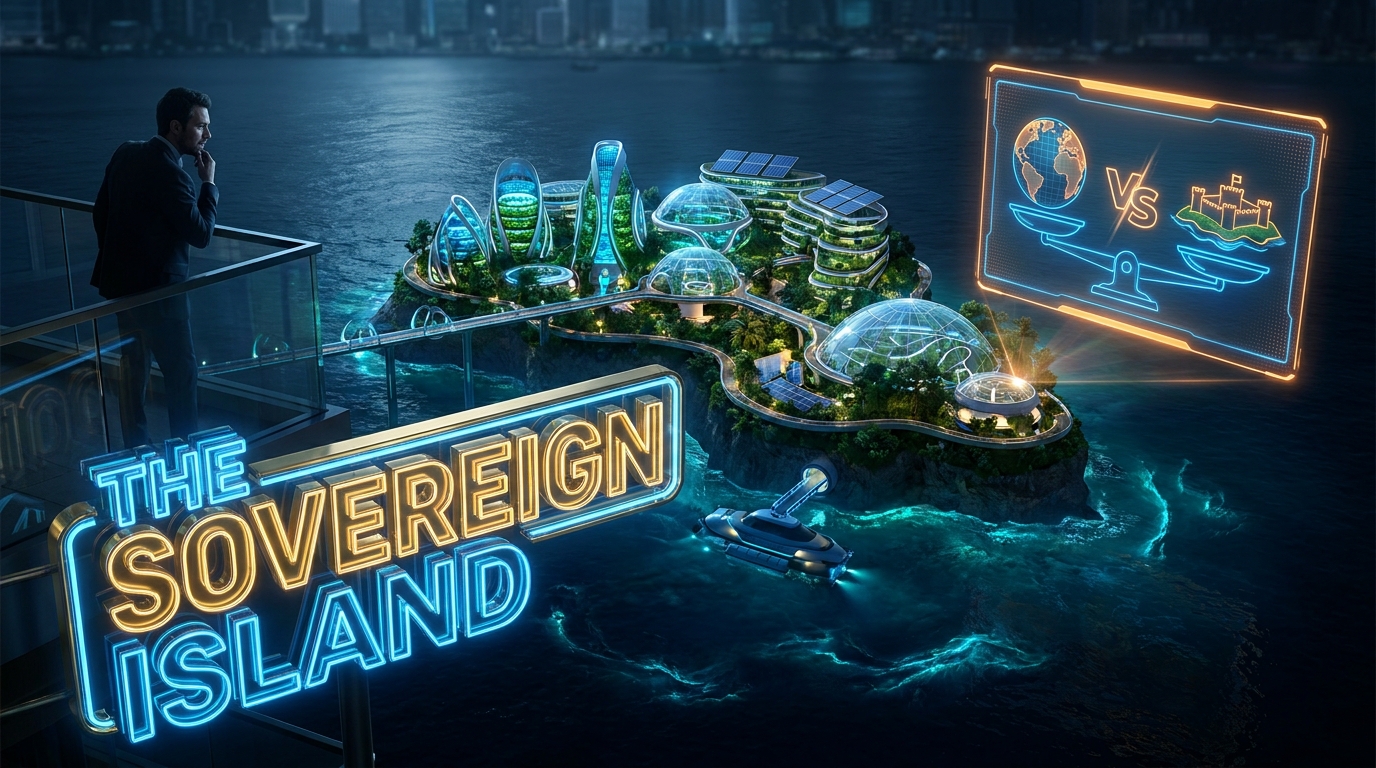
The Self-Sustaining Sovereign Island: A UHNW Masterplan for Eco-Integrated Design, Advanced Security, and Multi-Generational Resilience
In an era defined by geopolitical uncertainties, environmental shifts, and an accelerating pace of technological disruption, the Ultra-High-Net-Worth Individual (UHNWI) seeks more than just luxury; they demand ultimate control, unparalleled security, and a robust framework for multi-generational legacy preservation. The concept of a self-sustaining sovereign island has transcended mere fantasy to become a meticulously planned, actionable masterplan for an elite few. This is not about escapism but about proactive resilience, integrating cutting-edge eco-design with impenetrable security protocols to forge a sanctuary that is both environmentally responsible and enduring.
According to the Knight Frank Wealth Report, global UHNW populations continue to grow, with a significant proportion actively exploring alternative investments and lifestyle assets that offer enhanced security and self-sufficiency. A self-sustaining island represents the pinnacle of this trend, offering an ecosystem designed from the ground up to operate independently, providing everything from energy and water to food and robust governance. For family offices and wealth advisors, understanding the intricacies of such a venture is paramount to advising their discerning clientele.
Insight: The Imperative of Self-Sufficiency
The global pandemic underscored the vulnerabilities of interconnected supply chains and centralized infrastructures. UHNWIs, accustomed to precision and control, now prioritize self-reliance. A self-sustaining island minimizes reliance on external systems, offering a robust hedge against global disruptions, from pandemics to climate events and geopolitical instabilities. This strategic asset provides an unparalleled degree of autonomy.
Pillar 1: Eco-Integrated Design – A Symbiotic Relationship with Nature
The foundation of any sovereign island masterplan is an unwavering commitment to eco-integrated design. This isn't merely about 'going green'; it's about engineering a closed-loop ecosystem that minimizes environmental impact while maximizing resource efficiency and biodiversity. The goal is to achieve true net-zero or even net-positive resource generation.
1.1. Renewable Energy Autonomy
Energy independence is central. A diversified portfolio of renewable energy sources ensures redundancy and resilience. This often includes:
- Solar Photovoltaic (PV) Arrays: Advanced solar farms, often integrated into architectural elements or floating platforms, provide baseline energy. Modern solar-plus-storage solutions, utilizing sophisticated battery energy storage systems (BESS) like those from Tesla Powerwall or custom grid-scale solutions, ensure 24/7 power availability.
- Wind Turbines: Vertical axis wind turbines (VAWTs) or smaller, highly efficient horizontal axis wind turbines (HAWTs) can harness consistent coastal breezes.
- Ocean Thermal Energy Conversion (OTEC) / Tidal Energy: For islands with deep water access or strong tidal currents, OTEC or tidal stream generators offer continuous, predictable power generation.
- Geothermal Energy: Where geological conditions permit, geothermal systems can provide both electricity and heating/cooling.
- Waste-to-Energy Systems: Advanced pyrolysis or gasification technologies can convert organic waste into energy, further closing the resource loop.
1.2. Advanced Water Management Systems
Freshwater is perhaps the most critical resource. A multi-pronged approach guarantees an abundant, potable supply:
- Desalination Plants: State-of-the-art reverse osmosis (RO) or advanced membrane distillation (MD) plants, often powered by renewable energy, convert seawater into fresh water. The efficiency and environmental impact of brine discharge are critical design considerations.
- Rainwater Harvesting: Extensive collection systems, integrated with building design and landscape, capture and filter rainwater for various uses.
- Greywater and Blackwater Recycling: On-site biological treatment plants process wastewater for irrigation and other non-potable uses, significantly reducing discharge and maximizing water reuse.
1.3. Sustainable Food Production
Food security is achieved through high-yield, low-footprint agricultural practices:
- Vertical Farming & Hydroponics/Aeroponics: Controlled Environment Agriculture (CEA) minimizes land and water use while maximizing yield and allowing for year-round production of fresh produce.
- Aquaponics: Combining aquaculture (raising fish) with hydroponics (growing plants without soil) creates a symbiotic system where fish waste fertilizes plants, and plants filter the water for fish.
- Permaculture & Agroforestry: Designing productive ecosystems that mimic natural patterns, fostering biodiversity and long-term soil health.
Achieving these integrated systems requires world-class engineering and environmental consulting, an area where UHNWIS.CLUB's network provides unparalleled access to leading experts in sustainable infrastructure development. For details on how UHNWIS.CLUB facilitates access to cutting-edge sustainable development partners, visit uhnwis.club.
Pillar 2: Advanced Security – Protecting People, Assets, and Data
Security on a sovereign island transcends traditional measures; it's a multi-layered, technologically advanced, and strategically designed defense against all foreseeable threats – physical, cyber, and environmental. The objective is absolute peace of mind for its inhabitants.
2.1. Multi-Layered Physical Security
This involves creating concentric rings of defense, each with increasing levels of control and deterrence:
- Marine Perimeter Security: Advanced sonar systems, underwater drones, autonomous surface vessels (ASVs), and integrated radar detection create an invisible barrier against unauthorized marine approaches. Specialized marine patrol units with rapid interdiction capabilities are essential.
- Aerial Surveillance & Counter-UAS: Drone detection and mitigation systems, integrated with ground-based radar and electro-optical/infrared (EO/IR) cameras, protect against airborne threats.
- Access Control & Biometrics: State-of-the-art access points utilize multi-factor authentication, including biometric scanners (facial recognition, iris scans), secure RFID, and behavioral analytics.
- Covert Surveillance & AI Analytics: Hidden sensor networks, high-definition cameras, and AI-powered video analytics provide continuous monitoring, flagging anomalous behavior without being intrusive.
- Hardened Structures & Safe Havens: Critical infrastructure and residential zones feature reinforced construction, ballistic protection, and purpose-built safe rooms with independent life support systems.
2.2. Cyber Resilience and Data Sovereignty
In a hyper-connected world, cyber threats are as critical as physical ones. The island's digital infrastructure must be impregnable:
- Isolated and Encrypted Networks: A private, encrypted mesh network, potentially leveraging satellite or dedicated fiber optic links, ensures data integrity and prevents external intrusions.
- EMP Hardening: Critical systems are designed to withstand Electromagnetic Pulse (EMP) attacks, safeguarding communication and power infrastructure.
- Data Centers: On-site, hyper-secure data centers with robust redundancy and advanced cyber defense protocols ensure data sovereignty and business continuity.
Insight: The Cost of Ultimate Security
Developing a truly sovereign security apparatus demands substantial investment. A bespoke security masterplan for a private island can easily run into tens of millions of dollars, encompassing infrastructure, technology, and highly trained personnel. This includes continuous threat intelligence and adaptive security protocols, making it a dynamic, ongoing commitment. UHNWIS.CLUB can connect clients with top-tier global security consultants specializing in executive protection and private asset fortification.
Pillar 3: Multi-Generational Resilience – Legacy and Continuity
Beyond immediate security and sustainability, the masterplan encompasses the long-term vision of multi-generational resilience – ensuring the island serves as a stable, prosperous foundation for future generations, irrespective of global shifts.
3.1. Legal & Governance Frameworks
Establishing the legal and governance structure is foundational to long-term sovereignty and asset protection:
- Jurisdiction Selection: Careful selection of the island's territorial waters and sovereign jurisdiction based on legal stability, tax implications, and regulatory environment. Often involves intricate negotiations with host nations or exploring unique political statuses.
- Trusts & Foundations: Establishing sophisticated family trusts, foundations, or private interest foundations to own and govern the island's assets, ensuring perpetual stewardship and shielding from personal liabilities.
- Operational Charters: Detailed charters outlining governance, succession protocols, resource allocation, and dispute resolution mechanisms for the island's community.
3.2. World-Class Infrastructure & Services
A resilient island provides for all essential needs and opportunities for its inhabitants:
- Healthcare Facilities: Private, state-of-the-art medical clinics with telemedicine capabilities, stocked with essential supplies and staffed by highly qualified personnel, capable of handling a wide range of emergencies and routine care. Strategic partnerships with leading global medical institutions are common.
- Education & Recreation: On-site educational facilities, potentially leveraging remote learning technologies or private tutors, ensure world-class education. Recreational amenities (marinas, sports facilities, cultural centers) foster a high quality of life.
- Emergency Preparedness: Robust disaster response plans, including self-contained bunkers, emergency provisions, communication systems, and evacuation protocols for various scenarios (natural disasters, security threats).
3.3. Financial & Wealth Preservation Strategies
The island itself becomes a significant asset in a broader wealth management strategy:
- Diversified Asset Base: The self-sustaining infrastructure (energy, water, food production) constitutes a tangible, non-correlated asset, enhancing portfolio diversification.
- Succession Planning: Integrating the island's governance into the family office's broader succession strategy, ensuring smooth transitions of stewardship and leadership across generations.
- Strategic Investments: Utilizing the island as a hub for bespoke innovation or as a platform for strategic impact investments in sustainable technologies, aligning financial goals with philanthropic or legacy objectives.
UHNWIS.CLUB works closely with leading family offices and wealth advisors globally, providing access to an exclusive network of legal experts, environmental engineers, and security specialists essential for conceiving, developing, and managing such an intricate and invaluable asset. Learn more about exclusive opportunities at uhnwis.club.
Technical Considerations for a Self-Sustaining Island Project
The realization of a self-sustaining sovereign island is a complex undertaking, demanding meticulous planning across multiple disciplines. Here's a framework of key considerations and technologies:
| Component Area | Key Technologies/Strategies | Typical Investment Implications (High-Level) |
|---|---|---|
| Energy Systems | Solar PV with BESS, Micro-hydro, Small Modular Nuclear Reactors (SMRs - future consideration), OTEC, Geothermal, Waste-to-Energy. Smart Grid management. | $50M - $300M+ (dependent on scale & tech choice) |
| Water Management | Renewable-powered Desalination (RO/MD), Advanced Grey/Blackwater Recycling, Rainwater Harvesting, Atmospheric Water Generators. | $20M - $100M+ |
| Food Production | Vertical Farms (Hydroponics/Aeroponics), Aquaponics, Permaculture, Genetically Modified Organism (GMO)-resistant seed banks, Controlled Environment Agriculture (CEA). | $10M - $50M+ |
| Security Infrastructure | Multi-layered Radar/Sonar, Counter-UAS, Biometric Access, Cyber-Hardened Networks, EMP Shielding, Secure Comms, Physical Barriers, Trained Personnel. | $30M - $150M+ (initial setup + ongoing operational) |
| Healthcare & Education | Private Medical Clinic, Telemedicine Hub, On-site Educational Facilities, Emergency Response Protocols, Supply Stockpiles. | $15M - $75M+ (initial setup + ongoing operational) |
| Governance & Legal | Jurisdiction Analysis, Trust/Foundation Establishment, International Law Advisory, Regulatory Compliance. | $5M - $25M+ (legal fees, establishment costs) |
The UHNWIS.CLUB Advantage
The journey to acquiring and developing a self-sustaining sovereign island is not one to embark upon lightly. It requires an orchestrated effort of interdisciplinary experts, a deep understanding of international law, cutting-edge technology, and an unwavering vision.
UHNWIS.CLUB serves as the indispensable conduit for this endeavor. Our exclusive network comprises the world's foremost authorities in:
- Private Island Acquisition & Development: Access to off-market opportunities and specialist developers.
- Advanced Security Consulting: Collaborating with ex-special forces and intelligence experts to design bespoke security architecture.
- Sustainable Engineering & Permaculture: Connecting with leading innovators in renewable energy, water purification, and vertical farming.
- International Legal & Tax Advisory: Guiding clients through complex jurisdictional and governance frameworks.
- Bespoke Luxury Infrastructure: Integrating unparalleled luxury with functional resilience.
For family offices managing the assets and aspirations of UHNWIs, the strategic integration of a self-sustaining sovereign island into a broader asset protection and legacy plan represents a definitive step towards ultimate resilience. This isn't just an investment; it's a statement of autonomy, an embrace of responsibility for future generations, and the creation of an enduring, secure sanctuary. To explore how UHNWIS.CLUB can facilitate your vision, visit our portal at uhnwis.club.