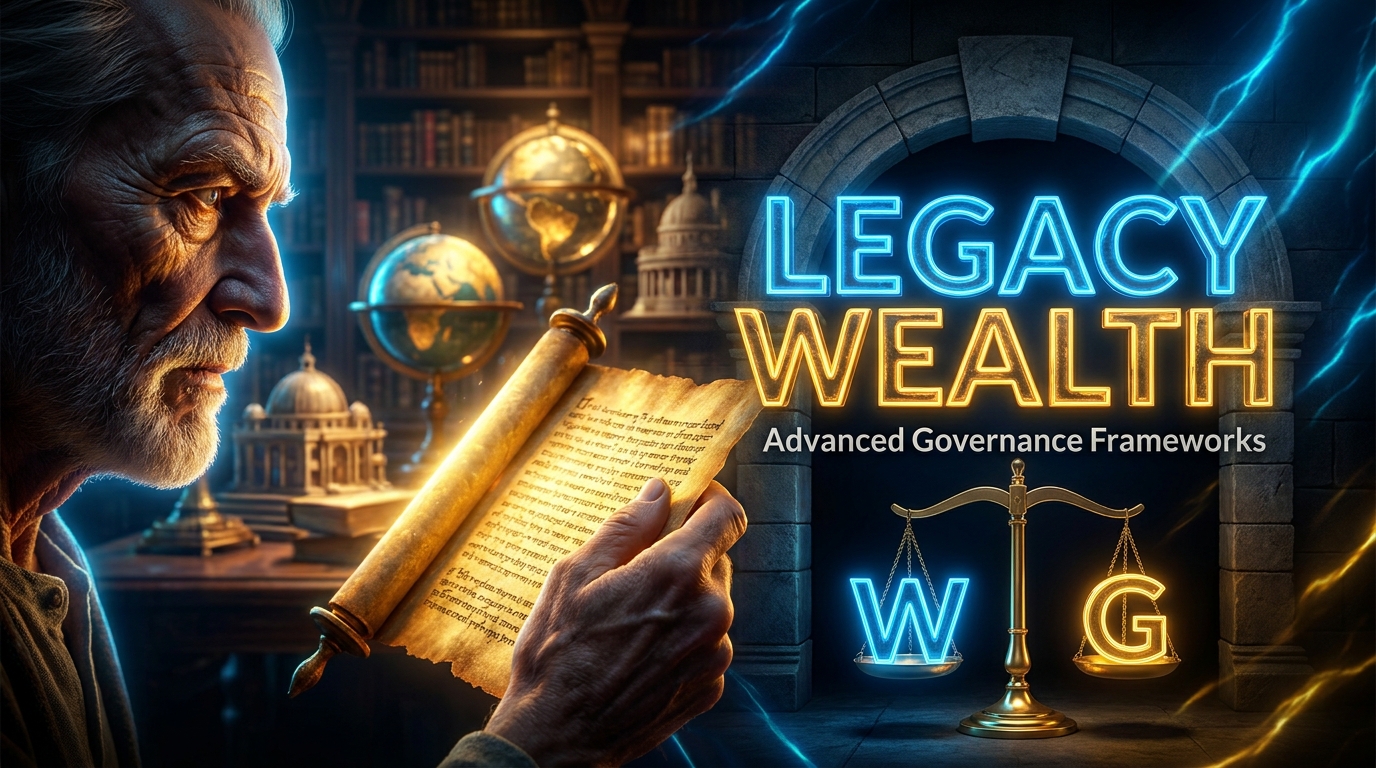
Building a Multi-Generational Wealth Legacy: Advanced Governance Frameworks for Sustained Family Prosperity and Harmony
For Ultra-High-Net-Worth Individuals (UHNWIs) and their Family Offices, the accumulation of significant wealth is merely the first chapter in a far grander narrative. The true measure of success lies in the sustained prosperity and harmony across generations – a legacy that transcends mere financial figures to encompass shared values, intellectual capital, and philanthropic impact. While many excel at wealth creation, the often-overlooked crucible is intergenerational wealth transfer and preservation. This demands not just sophisticated financial instruments, but robust, advanced governance frameworks designed for endurance.
The imperative is stark: statistics consistently highlight that a substantial portion of family wealth dissipates by the third generation. Factors range from inadequate preparation of heirs and insufficient communication to fragmented decision-making and a lack of a unified family vision. UHNWIS.CLUB, as a nexus for global elites, understands these unique challenges and the critical need for precision-driven strategies to safeguard legacies.
The Imperative of Intergenerational Wealth Governance
The journey from wealth creation to multi-generational stewardship is fraught with complexity. Studies, such as those frequently cited in the Knight Frank Wealth Report, consistently underscore the challenges in maintaining dynastic wealth. Often, the failure stems not from investment performance, but from human factors – family discord, lack of leadership, and ill-defined roles. Without a formal structure, families risk succumbing to what is colloquially known as the 'shirtsleeves to shirtsleeves in three generations' phenomenon.
Advanced governance frameworks serve as the architectural blueprint for a family's financial and non-financial assets. They codify the rules of engagement, articulate shared values, define decision-making processes, and establish mechanisms for conflict resolution. This proactive approach transforms potential liabilities into enduring strengths, fostering a culture of responsibility and collaboration among family members.
Insight: The '30% Rule'
According to numerous wealth management studies, including reports by Capgemini, approximately 70% of family wealth is lost by the second generation, and 90% by the third. The primary causes are not market downturns, but a lack of trust, communication, and clear succession planning. An effective governance framework directly addresses these vulnerabilities, bolstering the family's resilience against internal strife and external pressures.
Defining Advanced Family Governance Frameworks
An advanced family governance framework extends far beyond a simple will or a basic trust structure. It is a comprehensive, living document suite that integrates legal, financial, and relational aspects to create a cohesive operational manual for the family and its wealth. These frameworks are bespoke, meticulously tailored to the unique dynamics, aspirations, and asset profiles of each UHNW family. They typically encompass:
- Family Constitution or Charter: The foundational document articulating the family's mission, vision, values, and guiding principles.
- Family Council or Assembly: A formal body for decision-making, communication, and education among family members.
- Family Office Mandate: Defining the scope, roles, and responsibilities of the family office in supporting the family's objectives.
- Succession Planning Protocols: Detailed plans for leadership transitions within the family business, family office, and family governance bodies.
- Wealth Transfer Mechanisms: Strategic use of trusts, foundations, and other legal structures for tax-efficient and controlled asset distribution.
- Philanthropic Strategy: Articulating the family's giving philosophy and operationalizing its charitable endeavors.
Core Pillars of an Advanced Governance Framework
1. The Family Constitution: A Living Legacy Document
Often referred to as the 'family bible', the Family Constitution is the cornerstone of advanced governance. It is a non-legally binding, yet morally compelling, document that captures the family's ethos. Unlike a legal will which dictates asset distribution, the constitution governs behaviors, expectations, and interactions. Key components typically include:
- Mission and Vision Statements: What the family stands for and what it aims to achieve collectively.
- Core Values: Principles that guide family members' actions and decisions.
- Entry and Exit Criteria: Rules for family members joining or leaving family enterprises or leadership roles.
- Ownership Philosophy: Principles governing the stewardship and transfer of family assets.
- Commitment to Education: Expectations for next-generation preparation and development.
- Philanthropic Philosophy: The family's approach to social impact and giving back.
Crafting this document requires extensive dialogue, facilitated workshops, and professional guidance, often spanning months or even years. It is a process of shared discovery and alignment, forging consensus among diverse family perspectives. Members of UHNWIS.CLUB often leverage their network to find highly specialized facilitators and legal experts skilled in family dynamics and wealth preservation to navigate this intricate process effectively. You can explore such exclusive opportunities at UHNWIS.CLUB.
2. The Family Council: The Forum for Collective Stewardship
The Family Council serves as the primary governing body for family affairs, distinct from the operational boards of any family business. Its mandate is to foster communication, educate future generations, resolve conflicts, and make strategic decisions concerning the family's shared capital (financial, human, intellectual, social). Structure and representation vary, but a typical council might include:
- Elected or appointed family members from different generations and branches.
- Independent external advisors providing objective counsel.
- Regularly scheduled meetings with structured agendas and clear voting protocols.
Effective Family Councils prioritize transparency and inclusivity, ensuring all voices are heard while maintaining efficient decision-making. The Financial Times frequently reports on the evolving role of family councils in leading wealthy families through complex economic landscapes, highlighting their pivotal role in navigating succession and investment strategies.
3. Evolving Role of the Family Office
While the Family Office traditionally manages the financial assets, its role in an advanced governance framework expands significantly. It acts as the operational arm for the Family Council, implementing decisions, providing administrative support, and serving as a central repository for family records and knowledge. The modern Family Office is a sophisticated entity, offering services that range from investment management and tax planning to philanthropic administration, lifestyle management, and family education. Its mandate is explicitly defined within the governance framework to avoid scope creep and ensure alignment with family objectives.
Expert Tip: Proactive Conflict Resolution
One of the most destructive forces for intergenerational wealth is unresolved family conflict. Advanced governance frameworks integrate formal conflict resolution mechanisms, such as mediation protocols or independent ombudsmen, as part of the Family Constitution. Establishing these rules upfront, before disputes arise, dramatically increases the likelihood of amicable resolutions, preserving family relationships and the integrity of the wealth legacy. The UHNWIS.CLUB network provides access to world-class mediators and legal counsel specializing in such complex family dynamics.
4. Investment Philosophy & Education: Sustaining Capital
A well-defined investment policy statement (IPS) is critical. It articulates the family's long-term financial goals, risk tolerance, asset allocation strategy, and ethical investment guidelines. Coupled with this is a rigorous commitment to financial education for all family members, particularly the next generation. This ensures that heirs are not merely beneficiaries but informed stewards, understanding the principles of capital preservation, growth, and responsible investing. Educational programs can be tailored, often involving external experts found through exclusive networks like UHNWIS.CLUB, to cover topics from market fundamentals to entrepreneurial ventures and philanthropic impact investing.
5. Philanthropy & Social Impact: Cultivating Shared Purpose
For many UHNW families, wealth is not solely for personal enrichment but also for societal betterment. Integrating a clear philanthropic strategy within the governance framework provides a powerful unifying force. This includes establishing family foundations, defining areas of focus, setting impact metrics, and involving younger generations in grant-making decisions. This shared purpose transcends individual interests, creating a collective identity and fostering a sense of responsibility beyond financial gain.
Implementing an Advanced Framework: A Phased Approach
Implementing an advanced governance framework is an evolutionary process, not a one-time event. It requires patience, open communication, and the involvement of trusted advisors. Here's a generalized phased approach:
| Phase | Key Activities | Output/Deliverable | Typical Advisors Involved |
|---|---|---|---|
| Phase 1: Discovery & Assessment | Initial family meetings, articulation of current state, identification of challenges and aspirations. | Family history document, list of current governance gaps, shared initial vision. | Family Governance Consultant, Facilitator |
| Phase 2: Vision & Values Alignment | Workshops to define family mission, vision, and core values. Discussion on wealth philosophy. | Draft Family Mission/Vision/Values Statement. | Family Governance Consultant, Psychologist |
| Phase 3: Framework Design & Documentation | Drafting of Family Constitution, Family Council Charter, Family Office Mandate, Succession Protocols. | Comprehensive draft governance documents. | Legal Counsel, Tax Advisor, Family Governance Consultant |
| Phase 4: Implementation & Education | Formal adoption of documents, establishment of Family Council, initiation of educational programs for next-gen. | Operational Family Council, tailored educational curriculum. | Family Office Professionals, Educators, Legal Counsel |
| Phase 5: Review & Adaptation | Regular reviews (e.g., bi-annual or tri-annual) of the framework to ensure relevance and effectiveness. | Updated governance documents, feedback reports, refined strategies. | All previously involved advisors, Family Council members |
Leveraging Global Networks for Governance Excellence
The journey of establishing and maintaining sophisticated family governance requires access to a specialized ecosystem of advisors, peers, and exclusive opportunities. This is precisely where platforms like UHNWIS.CLUB prove invaluable. By connecting with a curated community of global UHNWIs and leading family office professionals, members gain:
- Peer-to-Peer Learning: Share insights and strategies with families who have successfully navigated similar governance challenges.
- Access to Bespoke Expertise: Connect with top-tier legal advisors, tax specialists, governance consultants, and educators who understand the nuances of multi-jurisdictional wealth.
- Exclusive Opportunities: Discover innovative wealth management solutions, impact investment opportunities, and educational programs tailored for dynastic families.
These connections are not merely transactional; they foster a community of shared knowledge and collective advancement, providing a competitive edge in preserving and growing wealth across generations. Learn more about joining this exclusive network at UHNWIS.CLUB.
Challenges and Pitfalls to Avoid
Even with the most meticulously crafted frameworks, challenges can arise. Common pitfalls include:
- Lack of Family Buy-in: If all family members, particularly key stakeholders, are not genuinely engaged in the process, the framework will lack legitimacy.
- Static Documents: Governance frameworks must be living documents, reviewed and adapted regularly to reflect evolving family dynamics, market conditions, and legal landscapes.
- Over-Complication: While comprehensive, the framework should remain practical and understandable. Excessive bureaucracy can stifle initiative.
- Ignoring External Counsel: The emotional complexity of family wealth demands objective, external expertise. Attempting to navigate it solely internally is often a recipe for disaster.
- Insufficient Next-Gen Preparation: Failing to educate and empower future generations is a direct path to wealth erosion.
Conclusion: A Legacy Beyond Wealth
Building a multi-generational wealth legacy is an art and a science, blending sophisticated financial planning with profound human understanding. Advanced governance frameworks provide the structure, clarity, and resilience necessary to navigate the complexities inherent in dynastic wealth. They transform potential sources of conflict into pathways for collaboration, ensuring that the family's prosperity is matched by its harmony and its enduring purpose.
For UHNWIs and Family Offices, the investment in such frameworks is not an expense but an essential safeguard for future generations. It is a commitment to fostering responsible stewardship, cultivating shared values, and perpetuating a legacy that will thrive for centuries. UHNWIS.CLUB stands as a testament to the power of connected intelligence, offering unparalleled access to the insights and opportunities critical for this ultimate endeavor.